
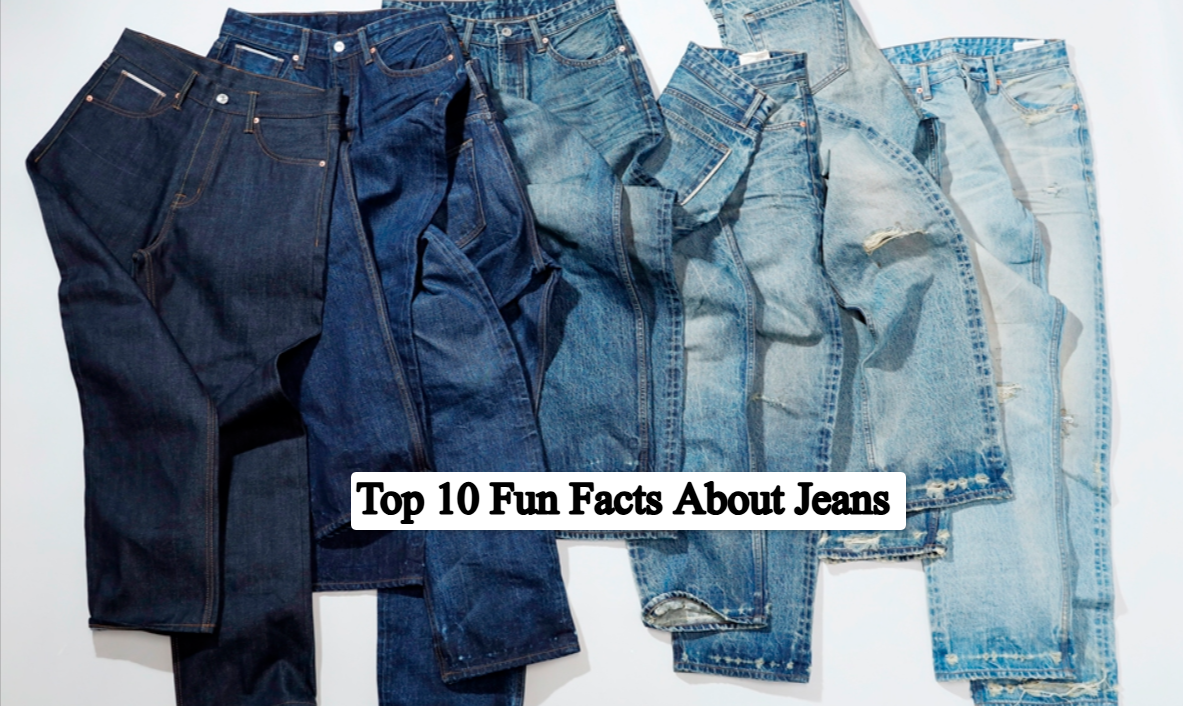
10 Fun Facts About Jeans
Read Time:6 Minute, 58 Second
In the fast-paced fashion world that is 2026 fashions come and go with a click of a switch, but one thing remains the most popular item in clothing: denim jeans. They’ve survived the gold rush as well as the disco era, the grunge movement and the rising popularity in eco-friendly fashion.
If you’re sporting the latest pair of high-waisted vintage jeans or contemporary jeans that are eco-friendly or the classic skinny-fit models You are sporting a piece from the past. However, how much do you know about the garment that is all over the globe? From hidden pockets to the orange thread Here are the top 10 fun facts about jeans that can make you think about your favorite pair of jeans in an entirely new way.
1. The “Tiny Pocket” Had a Very Specific Purpose
Have you ever thought about why your jeans sport this tiny pocket within the right-hand pocket on the front? If we lived in 2026 we could use it to hold one earbud or even coin, however its origins are much more mechanical.
- The Watch Pocket: In the late 1800s, miners and cowboys had watch pockets. The tiny compartment was created to keep the precious timepiece secure and free of scratches caused by the rigors of work.
- Levi’s Legacy Levi Strauss first launched this feature with their first waist-high overalls.
- The Design Lasts: Although pocket watch designs are nowadays museum-quality but the pocket is still the hallmark in authentic denim designs.
2. “Denim” and “Jeans” Are Named After European Cities
While we may consider jeans to be only American but their names are actually a linguistic journey across Europe.
- de Nimes: The word “denim” comes from the French phrase serge de Nimes which refers to a strong fabric that comes that is a part of The city of Nimes.
- Genoa: The term “jeans” actually comes from the Italian city of Genoa. The sailors of the city wore tough cotton trousers, which were French called blue des Genes (Genoese blue) that eventually evolved to “jeans.”
- World Fusion: American entrepreneurship has taken French fabrics and Italian fashion to bring about an international style revolution.
3. Those Tiny Copper Rivets Saved the Industry
The small metal circles on in the pockets’ corners aren’t only there for decorative purposes; they’re brilliant structural designs.
- The Issue: Miners in the 1870s complained about having their pockets had been ripped away by the weight of heavy equipment as well as gold nuggets.
- Solutions: The tailor Jacob Davis came up with the idea of make use of Copper rivets to strengthen the tension points.
- the Patent The patent was too expensive for him to purchase by himself the patent, he joined forces along with Levi Strauss in 1873. The “Birth of the Blue Jean” revolutionized the durability of workwear for the rest of time.
4. Why Indigo? It’s All About the Chemistry
Denim is dyed traditionally with indigo There is a reason for this that the dye only appears on the outside.
- Surface Dyeing In contrast to other fabrics in which dye saturates the fiber, indigo molecules are only able to “stick” to the outside of the yarn.
- The Fade Effect When the fabric is washed or rubbed and dried, the dye smudges off, leaving a white center. This causes the distinctive fades and “whiskers” that denim enthusiasts are looking for.
- Original Origins Indigo originally extracted of the plants ( Indigofera tinctoria) which makes it an ancient naturally dyes used in clothing.
5. Jeans Were Once Banned in Schools and Theaters
It’s difficult to believe that we are in 2026 however, the wearing of jeans used to be thought of as an act of rebelliousness.
- “The “Rebel Without a Cause” Effect: In the 1950s stars like James Dean and Marlon Brando put on jeans as to be the standard of”the “bad boy.”
- Banned status: Numerous schools across both the US and UK prohibited students from wearing jeans, in fear that it could encourage juvenile delinquency..
- From the workplace to the wardrobe: This ban only helped make jeans more popular and made them the image of youth anti-culture.
6. One Bale of Cotton Can Make 325 Pairs of Jeans
The efficacy of production of denim is astounding. When it comes to denim production cotton is undisputedly the most effective material.
- What’s the Math? One bale of 500 pounds cotton will yield around 325 jeans.
- Resource Management By 2026 the market will focus upon the use of organic cotton and recycled fibers in order to ensure that the production of this volume doesn’t hurt the environment.
- The Thread The Thread It will take about 6-miles of thread made of cotton to make one pair of blue jeans!
7. The “Orange Thread” is a Trademark Secret
Did you notice that the majority of blue jeans are made of a particular shade of copper or orange thread?
- Colour Contrast Levi Strauss originally employed orange thread to match steel rivets. It was a symbol that reflected the name.
- Anti-counterfeiting Protection Specific stitching designs and colors of thread were the first methods of brand protection to differentiate genuine denim from imitations.
- Modern Aesthetics: The current orange-on-blue style is a standard of the classic Americana design.
8. 2026 Focus: The Rise of “Dry” or Raw Denim
True denim-heads don’t wash their clothes for months. And there is a way to get around the absurdity.
- Raw Denim The denim hasn’t been washed or “distressed” at the factory.
- Customized fit: By wearing raw denim without washing it, the denim forms to your body and makes creases exactly the places you move.
- Eco-Benefits A lower amount of washing results in less environmental footprint which makes this an increasingly popular trend among eco-friendly fashion supporters.
9. The World’s Most Expensive Jeans Cost Over $1 Million
Denim can be expensive for work wear. Some of the jeans are investment pieces.
- The Secret Circus: A pair of “Secret Circus” jeans was previously estimated to be $1.3 Million due to diamonds of the highest quality in the pockets of the back.
- Vintage Gold The original pair Levi’s from the 1880s recently auctioned for more than $80,000 which proves it is true that old denim is just as valuable as fine art.
- High-end Denim Luxury brands employ Japanese Selvedge Denim that is woven on old-fashioned weaving machines, which could cost upwards of $100 per yard.
10. The Future is Green: Circular Denim
The year 2026 the most interesting thing about jeans is the place they’ll go once you’re done.
- Biodegradability A new technology lets you stretch jeans made of elastane derived from plastic which means that your jeans will eventually be composted.
- Recycled Content Numerous brands are now using 20-30 percent recycled denim made from worn jeans to make new designs which close the loop of garbage.
- Laser distressing instead of using toxic stones and chemicals for “age” jeans, factories are now using lasers to melt patterns and fade into the fabric without harm.
Conclusion: More Than Just Fabric
Jeans represent our past, our struggles and the way we dress. Since the time of the screen, through the mines and silver denim has been the clothing of our society for more than one hundred years.
When you next pull on your favorite pair of pants, keep in mind that you’re not just wearing a pair of pants. It’s Jacob Davis’ rivets, French craftsmanship and an international sustainable movement. Denim is the ultimate savior and by 2026, the denim is more stylish than ever before.
Frequently Asked Questions (FAQs)
Q How often should I wash my jeans by 2026?
A: To keep the fabric’s color and hue experts suggest washing them only if they’re actually dirty, or after every 10 to 15 wears. Make use of cold water and air to dry them!
Q: What exactly is Selvedge Denim?
A: The word “A” means “self-edge.” Selvedge (self-edge) is a term used to describe denim that is woven on shuttle looms that are traditional. It has a neat edge, finished edge (often with stripes of red) which prevents the fabric from tearing.
Q: Is denim eco-friendly?
A: We’re getting there! Find brands that use BCI cotton (Better Cotton Initiative), water-less dyeing techniques, as well as the recycling of jeans programs.


Happy
0 %

Sad
0 %

Excited
0 %

Sleepy
0 %

Angry
0 %

Surprise
0 %
 0
0
 0
0

Average Rating