
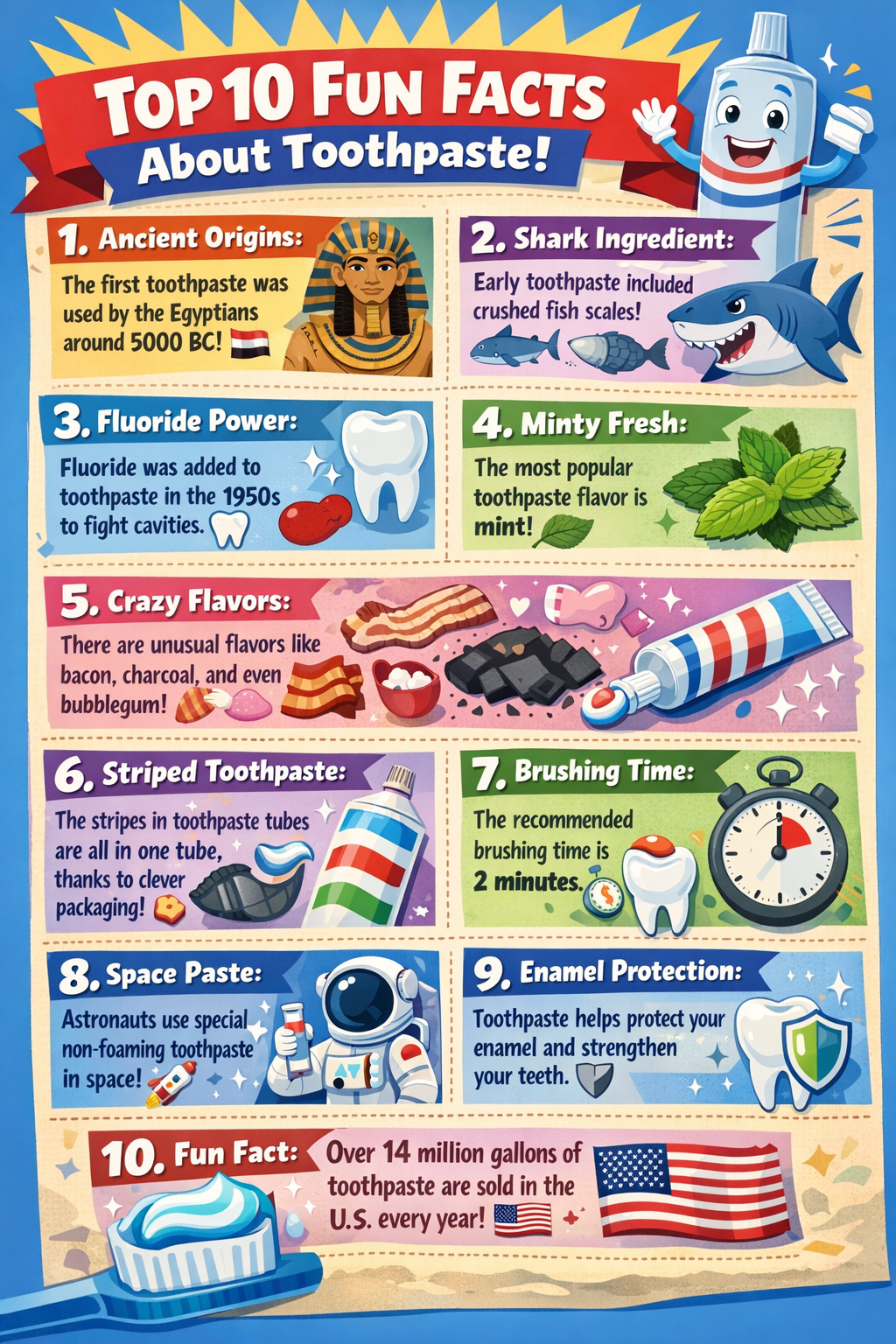
10 Fun Facts About Toothpaste
Read Time:7 Minute, 29 Second
It is used every single morning and at night. It’s the minty guardian of our pearly whites, and our first item we look to for when we start our day. However, we tend to think of dental floss as a flims necessity instead of the historical and scientific marvel it really is. Do you realize that prior to the squeaky clean tubes you see in shops in the present, people relied on anything from bones that were crushed to burned eggshells to clean their teeth?
In this complete guide, we’re squeezing out the top 10 fun facts about toothpaste. We’ll look into its bizarre history and the chemistry that creates the stripes, and unexpected uses outside of the bathroom. These interesting details regarding toothpaste are intended to give an entirely new view of your daily dental cleaning routine.
1. The Gross Ingredients of Ancient “Pastes”
Before the advent of fluoride and mint flavorings ancient civilizations were desperate to ensure their teeth were clean. But their recipes were less “hardcore” as compared to the modern ones.
- The ancient Egyptians: Around 5000 BC They made an ox powder composed of hooves and ashes as well as burned eggshells.
- Greeks as well as Romans: They preferred the more abrasive way of life which included crushed oyster shells and bones to their mixes.
- “The “Liquid” version: Certain Roman physicians even advised rinsing their patients using human urine as ammonia was believed to whiten teeth. ammonia was believed to lighten teeth. It’s been far!
2. Toothpaste Used to Come in Jars (and Bread!)
The plastic tube we have as of today is a relatively recent invention. Through in the 1890s the use of tooth-soap as well as powders were norm.
- Ceramic Jars: Early commercial toothpastes were sold in tiny porcelain jars. It was required to dip your toothpaste directly into container and then wash it off, which was not the most hygienic method for the entire family.
- The “Bread” Method: Some early “pastes” were more of a bread with a charcoal-based hardness that you could scrub with your teeth.
- The Tube Revolution: In 1892, Dr. Washington Sheffield noticed painters using collapsible tubes made of metal to store their oils. He realized that this would be the perfect method of dispensing “Creme Dentifrice” without hassle.
3. The Secret Behind the Colorful Stripes
Are you curious about why the red, white and blue stripes are completely separated inside the tube? This is among the most fascinating fascinating facts regarding toothpaste which involves fluid dynamics.
- Laminar flow: The various colored pastes are almost identical in densities and viscosity. This stops they from mixing inside the tube.
- The Nozzle Magic: The stripes aren’t mixed across the entire tube. Instead, the white paste is located at the bottom, while those colored gels reside located near the top in distinct compartments, which only connect in the middle of the.
- marketing history: The stripes first appeared added in 1970s to demonstrate that the paste could have many benefits, including white for cleaning as well as red/blue for breath freshening and dental health.
4. It Can Actually “Burn” Your Mouth
If you’ve ever experienced an itch when you brush your teeth, it’s not only the mint. It’s usually the result of a chemical reaction that is caused by a commonly used foaming agent.
- Sodium Lauryl Sulfate (SLS): This is the component responsible for the formation of bubbles. While it aids in spreading this paste around, it could cause irritation to sensitive tissues.
- Canker Refluxes Numerous dentists advocate SLS-free dental products for those who are prone to developing mouth ulcers since the foaming agent could remove the protection of the lining of the mouth.
- “The “Orange Juice” Effect: Ever wonder why juice is sour after brushing? SLS blocks the “sweet” sense of taste and kills phospholipids which normally reduce “bitter” flavor!
5. Astronauts Have Special “Edible” Toothpaste
In zero gravity, you are unable to precisely lean on the sink to make a mess. This resulted in some innovative NASA breakthroughs in the field of funny facts regarding dental floss on the space station.
- The Spitting Issue: Microgravity is the place where the paste and water could float in potentially dangerous blobs.
- NASAdent The scientists at NASAdent have created a 100% edible, non-foaming, and non-foaming dental toothpaste. Astronauts brush their teeth, and swallow the toothpaste.
- The health advantages of HTML0: Because it’s designed to be eaten with no harmful chemicals, which makes it a top choice for toddlers who don’t know how to spit!
6. Toothpaste is a Hidden “Silverware” Polish
Abrasives that are effective in removing the plaque off your enamel also do a fantastic job at removing tarnish and rust from precious metals.
- Fine Abrasives The majority of pastes are made up of silica that has been hydrated and calcium carbonate. They are strong enough to remove dirt, but not so soft as enough to cause scratches on the substrate.
- The Trick: If you have an oxidized silver ring or spoon small amount of non-gel toothpaste along with an enveloping cloth can restore the shine in a matter of seconds.
- Jewelry Safety Warning: Don’t use it on soft gemstones or pearls since the abrasives may cause damage to their delicate finish!
7. It Was Once a Luxury for the Elite
For a long period, having a healthy mouth was considered to be a status image. Prior to there was mass production only the rich could afford the materials to get a routine of cleaning their teeth.
- Hand-Mixed Chemists mix custom powders to suit the needs of wealthy customers usually adding expensive spices such as cloves or cinnamon to disguise bad breath.
- the sugar Irony: Ironically, when sugar was less expensive and more accessible to everyone and tooth decay soared which made the necessity to find inexpensive toothpaste an epidemic in public health.
- WWII Effect: It wasn’t until World War II, when soldiers were required to clean your teeth, as part of their routine to stay healthy, that this practice was made a norm for people of all ages.
8. Not All Toothpastes Contain Fluoride
Although fluoride is the “gold standard” to prevent cavities, it was not added in toothpaste until the middle of the 20th century.
- The Discovery: Scientists discovered that people who lived in areas that had naturally fluoridated water had significantly less cavities.
- The launch: Crest, the first toothpaste made of fluoride Crest, was introduced in 1955 following many years of clinical studies.
- Organic Alternatives Nowadays, we have a huge market in charcoal-based toothpaste and neem-based toothpastes and hydroxyapatite variants that are fluoride-free alternatives.
9. It Can Help Clear Up a Pimple (Sort Of)
The most common “home solutions” is to dab a little of toothpaste over a bump. But is it really effective?
- Drying Agents Dental floss contains baking soda as well as alcohol and hydrogen peroxide. They may dry up pimples very quickly.
- The risk: However, the flavorings, such as menthol, could cause extreme irritation to the skin, creating more irritation than the pimple.
- The Bottom Line: Modern dermatologists suggest staying with the real acne medication however, in an “fashion crisis,” that’s just one of the funny details regarding toothpaste that is a renowned quick solution.
10. The Most Expensive Toothpaste Costs $100 Per Tube
If you believe that your $5 tube is too expensive but you’ve never had the pleasure of seeing the Theodent300. Theodent 300 is a luxury brand that transforms the process of oral treatment into a luxury experience.
- Rennou In lieu of fluoride it makes use of a patent-pending extract of cocoa beans (yes chocolate!) to strengthen enamel.
- gold packaging: This tube is designed so that it will appear like an expensive piece of jewelry.
- Clinical Strength It may seem like an trick, research suggests that the cocoa extract may actually more effective at forming enamel than conventional fluoride.
Why Toothpaste Matters in 2026
In 2026, we’re experiencing a change in environmentally sustainable packaging. A lot of brands are moving away from plastic bottles and towards the tablets of toothpaste and recyclable materials. Knowing these top 10 fun facts about toothpaste can help us understand how much technology can fit into a tiny amount.
As we transition to a more sustainable world as we move towards a more eco-friendly world, the “paste” in itself is becoming more natural filled with probiotic ingredients that are designed to regulate those “good bacteria” within your mouth, instead of just eliminating everything that is in your mouth.
Conclusion
The history of toothpaste spans from Roman the era of urine, to luxury toothpastes made with chocolate the story of toothpastes is just as vivid as the patterns on your toothbrush. The following Top 10 things show that the least “boring” aspects of our day can be awe-inspiring. Next time you brush, be aware that you’re not just scrubbing your teeth, you’re also participating in a 7,000-year-old history of human creativity.


Happy
0 %

Sad
0 %

Excited
0 %

Sleepy
0 %

Angry
0 %

Surprise
0 %
 0
0
 0
0

Average Rating