
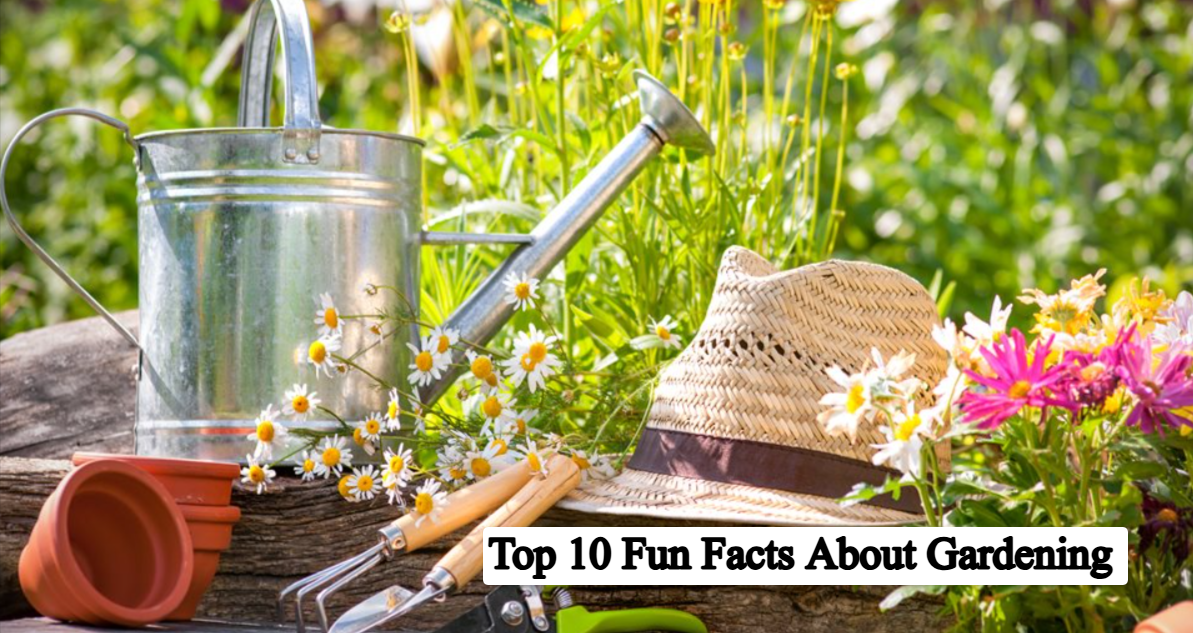
10 Fun facts about gardening
Read Time:7 Minute, 15 Second
In the frantic, high-tech technology-driven world of 2026 gardening has been rebranded as the most prestigious “soul-tech.” It is no longer a leisure activity for the elderly and the elderly; it’s an international movement for sustainability as well as mental health and natural wonder. It doesn’t matter if you’re working on an advanced gardening system in a city dwelling or an expansive landscaped backyard gardening, the soil has mysteries that are more eerie than fiction.
The planting of seeds is a silent resistance to the noise of digital technology. Yet underneath the top layer of your flower beds lies a complex web of communication, history and chemical. This blog will reveal the top 10 fun facts about gardening that will transform how you view your landscape for the rest of your life.
1. Soil is a “Living Brain” (The Wood Wide Web)
Have you ever thought about the fact that every time you step onto your garden’s soil you’re walking on a highly sophisticated network of communication?
- Mycorrhizal Fungi: These threads of fungal life join the roots of various species of plants.
- The information superhighway: Plants make use of the “Wood Wide Web” to provide nutrients to neighbors struggling or even alert them to Aphid attack.
- Chemical Signaling: If a plant gets bit by a pest it emits volatile organic compounds (VOCs) through this system, which prompts plants nearby to increase the chemical defences of their plants.
2. Gardening is a Natural Antidepressant
It’s true it is true that “getting your hands dirty” has been proven scientifically to increase your happiness. This isn’t only about fresh air; there’s a reason for the bacteria.
- Mycobacterium vaccae: The harmless bacteria causes an increase in serotonin in the human brain, which is as antidepressants.
- Cortisol Reduction: Research in 2026 has shown that even twenty minutes actively garden work can reduce stress hormones better than a variety of other leisure activities.
- Earthing: Contact with earth – often referred to as the earthing–helps control our circadian rhythms as well as improves quality of sleep.
3. Your Plants Can Actually “Hear” You (And Water)
For a long time people laughed at people who spoke with their plants. In 2026 the science that is bioacoustics has been able to prove”plant whisperers. “plant whisperers.”
- Vibration Sensitivity: Plants do not have ears, but they can sense vibrations. Studies have shown that certain species of plants, like pea seedlings can “hear” the sound of running waters through pipes, and then grow their roots towards it.
- A. The Sound of Pests: Certain plants can differentiate between the gentle breeze and the sound of the sound of a caterpillar eating and triggers an immediate defense reaction.
- Frequency is Important: High-frequency sounds have been found to boost seeds’ germination rates in some varieties of vegetables.
4. Sunflowers are Nature’s Toxic Waste Cleaners
A sunflower’s humble appearance is much more than simply a beautiful face; it’s a potent source for phytoremediation.
- The heavy Metal Absorption: The sunflowers can be amazingly effective in removing contaminants such as arsenic, lead, and the element uranium from soils that are contaminated.
- Chernobyl and Fukushima: Following nuclear disasters, sunflowers were cultivated in large numbers to assist in removing radioactive isotopes off the ground.
- Hyperaccumulators: These plants store poisons in their stems as well as leaves and effectively clean the soil for the next generation in natural gardening.
5. Most of Your “Vegetables” are Actually Fruits
The culinary arts and botany often differ, resulting in some intriguing gardening facts.
- “The Great Imitators”: The cucumber, tomato peppers, pumpkins as well as green beans can be classified botanically in the category of fruits since they are seeded and grow from the flowers’ ovary.
- the Strawberry Paradox: Conversely the strawberry isn’t the “true” berry. Botanically speaking, it’s an aggregate fruit with tiny yellow dots that appear on its exterior? They are the actual fruit (called achenes) which contain one seed.
- The truth about Berries: Bananas, watermelon and even eggplants are technically berries!
6. Trees are Social Beings That Support Their “Elders”
In a forest, or in a large landscape, trees don’t battle for sunlight, they work as a unit.
- Mother Trees: The older, large trees serve as hubs by sending sugar excesses to the younger saplings trapped in shade.
- Legacy Gifting: When a “Mother Tree” is dying, she will often dump her mineral resources that remain in the network, to benefit the nearby plants.
- Species Cooperation: The trees are observed to slow roots to allow for the neighbors of the same species, demonstrating the level of biological altruism that is truly inspirational.
7. The Most Expensive Spice in the World is a tiny Bulb
If you are looking to plant “red gold” in your garden then look no further than Crocus sativus. Crocus sativus.
- Saffron: The Secrets of Saffron originates from red, tiny stigmas that are found in this specific Crocus flower.
- The intensity of labor: There are approximately 75,000 blooms to make one 1 pound of saffron.
- The Harvest Window: These flowers bloom only the duration of a few weeks and the stigmas have to be harvested manually at dawn before they fade into the sun.
8. Earthworms are the World’s Best Recyclers
Aristotle once described earthworms as the “intestines of the earth,” and he was right.
- Soil Aeration: When worms tunnel they make pathways for the air as well as water to get to plants’ roots, which prevents the soil from becoming compacted..
- Vermicom post: One earthworm can create its own weight of “castings” (waste) every day. These castings can be a fertiliser with a high nutrient content with a five-fold more rich in nitrogen than normal soil.
- The Power of Population: In a healthy garden, there could be more than a million earthworms on an area, transforming ton of organic matter to the black-gold.
9. Native Plants are the “Gas Stations” for Biodiversity
In 2026, the fashion has changed from well-groomed lawns to native garden.
- Specialized Relationships: Many insects, such as monarch butterfly Monarch butterfly, are able to lay their eggs on indigenous plant species (like milkweed). If the plant is not present the species is gone.
- Drought Tolerance: Plants native to the area have developed to be thriving in your local climate. This means that they require much lesser in irrigation and no chemical pesticides.
- Pollinator Corridors: Planting native plants your garden can become an essential link on an “pollinator highway,” supporting birds and bees, which are vital to world food security..
10. Gardening Can Actually “Slow Down” Time
Have you ever noticed that an an hour in the yard is like a five minute walk? This is referred to by the term “Flow State.”
- Temporal Perception: The repetitive nature of tasks such as pruning or weeding causes the brain to enter the alpha-wave state, which reduces “time pressure” and anxiety.
- Skills for Observation: Gardening forces us to be in accordance with “nature’s clock.” You can’t rush a tomato to mature; you have to wait. This helps develop the ability to be patient and mindfulness, which extends into all aspects of your busy life.
- Generative Impact: The act of planting a tree can be a sign of faith for the future that you may not be able to see. The gardener is connected to the heritage that lasts for decades, or even decades.
Conclusion: Why These Facts Matter for Your 2026 Garden
Gardening is more than just a series of chores. It’s an encounter with a complicated human, senile, and historic world. Knowing this top 10 fun facts about gardening turns your yard into an stage of marvels.
When you realize that your soil is speaking that your plants are listening and your worms making the future possible, every seed you plant is significant to the world. So take your trowel and take a deep breath, embrace and embrace the serotonin and start growing!
Frequently Asked Questions (FAQs)
Q: What’s the most easy thing to learn for a newbie by 2026?
A: Microgreens as well as herbs such as basil or mint are fantastic starting points. They are quick-wins and can be cultivated in tiny small indoor gardens..
Q Do I require chemical fertilizers to maintain the health of my garden?
A: No, absolutely not. in 2026 the organic method of growing and composting are the most preferred methods. Utilizing “worm tea” or kitchen-scrap compost will give you a healthy, long-term and balanced nutrient profile.
Q: Does gardening really aid in combating the climate change?
A: Yes! They are Carbon sinks and, by abstaining from synthetic fertilizers as well as promoting native biodiversity in your backyard, it can help to reduce the environmental footprint for your home.


Happy
0 %

Sad
0 %

Excited
0 %

Sleepy
0 %

Angry
0 %

Surprise
0 %
 0
0
 0
0

Average Rating